It is one of the first questions parents ask us at the front desk: should my child learn piano or keyboard? The two instruments share the same black-and-white layout, so it is easy to assume they are interchangeable. They are closely related — but each has its own strengths, and choosing well can make the first year of lessons far more enjoyable.
What's actually different?
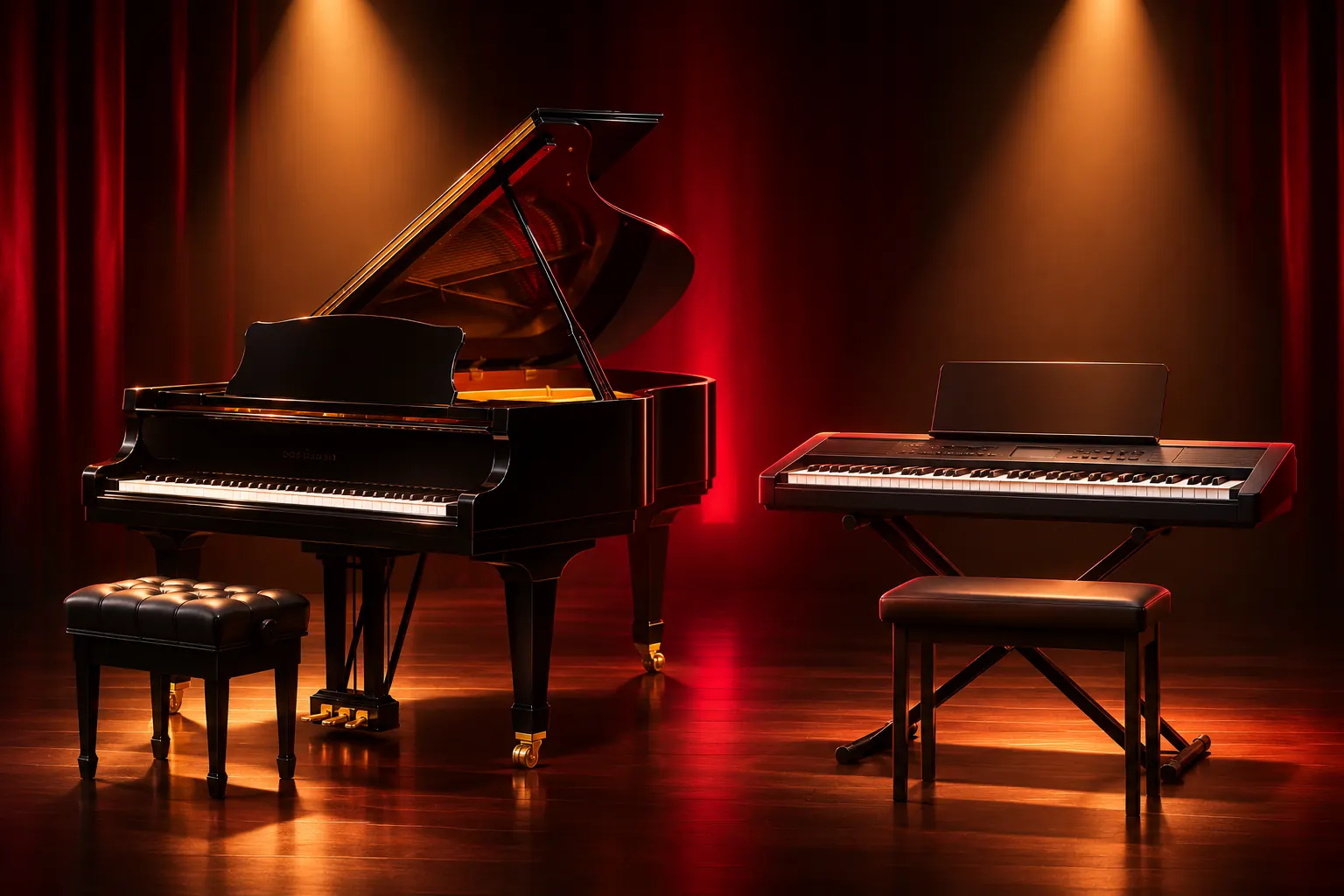
A piano (acoustic or a good digital piano) has full-size, weighted keys. Pressing a key harder makes the note louder, so children learn to control touch and expression from the very beginning. Most pianos have 88 keys.
A keyboard is lighter and usually has 61 or 76 keys that are not weighted. Its superpower is variety: hundreds of instrument voices, built-in rhythms and auto-accompaniment. A child can press one chord and hear a whole band play along.
| Piano | Keyboard | |
|---|---|---|
| Keys | Weighted, touch-sensitive | Light, usually unweighted |
| Best for building | Finger strength, control, classical technique | Chords, rhythm, creativity, confidence |
| Sounds | Piano | Hundreds of voices + rhythms |
| Space & budget | Larger | Compact and portable |
Choose piano if…
- Your child is drawn to classical music or wants to follow the graded exam path seriously.
- You want them to develop strong, independent fingers and expressive touch early.
- You have space for a digital piano with weighted keys at home.
Choose keyboard if…
- Your child loves film songs, pop music or simply experimenting with sounds.
- They are very young and a lighter touch will keep frustration low.
- You'd like a portable, affordable instrument to start with.
The best first instrument is the one your child actually wants to sit down and play.
The good news: skills transfer
Note reading, rhythm, scales, chords and theory are the same on both instruments. At Seven Notes, piano and keyboard students follow a similar foundation — technique, note reading and musicality — so a child who starts on keyboard can move to piano later (and many do) without starting over. Both paths can lead to graded exams with boards such as Trinity College London and ABRSM.
A simple way to decide
- Watch what your child gravitates to — the sound of a grand piano, or the fun of rhythms and voices?
- Think about practice at home: a weighted digital piano is ideal for piano students; a keyboard works well for keyboard students.
- Come and try both. A few minutes on each instrument with a teacher usually makes the choice obvious.
Not sure yet?
Message us on WhatsApp with your child's age and interests, and we'll suggest the right starting point — piano or keyboard.